GALLIM
Nov 18, 2026
PAUL TAYLOR: Tanowitz, Battle, Taylor
Nov 23, 2026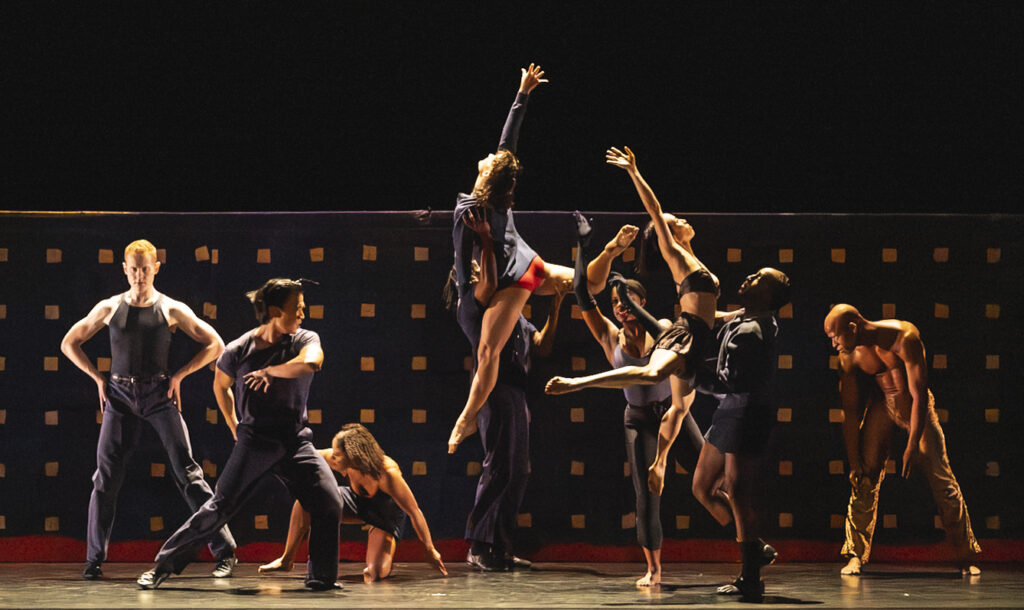
Partway into its season at Lincoln Center, the the Paul Taylor Dance Company displayed incredible physical stamina and technical virtuosity. This company, under the Artistic Direction of Michael Novak, has performed 16 different works in 19 days. It’s an astounding amount of steps, partnering, and changes for any dancer to remember. Hats off to these dancers.
Several Taylor classics grounded us in the stature of his place in dance history, three contemporary choreographers were featured: Robert Battle, Lauren Lovette, and Pam Tanowitz. To witness the breadth of understanding, range, and quick changes in repertory that this company displayed from night to night was a humbling experience.
The evening began with a luscious, classical ensemble work, Arabesque (1999), that referenced Islamic and Greek motifs and mythology. Next, the program moved to a disconcerting, scary, darker look at humanity, in Last Look (1985). And finally, the beloved Esplanade (1975). A delightful, seemingly simple yet complex romp based on pedestrian movements, this displayedTaylor’s genius at exploring form, music, technique, and emotion; and his ability to reach dance elites and the general audience.

Arabesque, referred to art and architecture decorating mosques, manuscripts, and tile work, with flowing, symmetrical patterns.. Opening with dancers in two dimensional still shapes, their arms lifted in right angles, flexed elbows and broken wrists.
Golden lighting by Jennifer Tipton highlighted Santo Loquasto’s porcelain colored dresses and crowning tiaras against bare chested men in briefs with a sheer fabric skirt overlays. Claude Debussy’s music enhanced each section of the dance, featuring the sound of oboe and harp.
Taylor moved the dancers through space, in connecting partnering patterns, circling around each other, moving on to the next. Women were elegantly lifted and exchanged between men. Movement decorated the space in this modern reference to antiquities, a beautifully exquisite opening work.

A darker, apocalyptic Last Look, challenged the viewer to ponder the worst side of our souls. With set design by Alex Katz, multiple mirrors stood in angles on stage, reflecting dancers from many points of view.

Jennifer Tipton’s lights are dimmed making it hard to see what we don’t want to see. We can’t see their faces. Who are they? Conventional dance steps disappeared as these people fell away from each other in primal shakes, quivers, quakes… in despair, trying and failing to connect at relationships. Two embraced momentarily and then rejected each other. A man was unable to escape his reflection. This riveting, wrenching work was a wake up call — a despairing glimpse of community at its worst; a warning in these fractured times.

Esplanade speaks of joy, connection, and sheer happiness. Bach’s Violin Concerto in E Major and Double Concerto for 2 violins in D Minor helped structure this dance in five movements. The first movement was built on organized patterning and the last, showed endless fearless runs, attitdue turns, dives, and slides to the floor. In contrast, a deeper experience of love and loss emerged in the middle section. Always fresh, we, as long time fans, or newcomers, look forward to seeing Esplanade and again.
EYE ON THE ARTS, NY – Mary Seidman