


JEWELS
Oct 2, 2026
OSCAR
Oct 12, 2026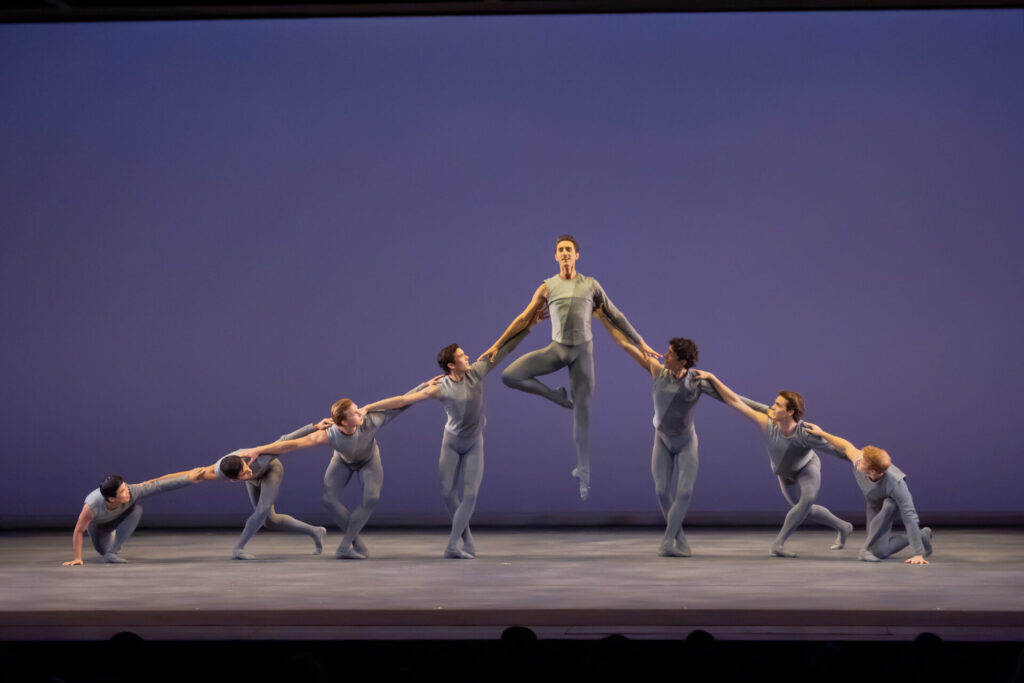
The final evening of the Fall For Dance Festival ended with an eclectic array of performances from near and far. Pony Cam, an Australian theater group of five, the Australian Ballet, and the Miami Ballet demonstrated markedly different works and tastes.
Pony Cam’s kinda like that started out the evening with all five performers in front of the curtain informing the audience of their Fall for Dance 2026 commission. As a celebration of the 23rd year, they committed to research videos and reviews of all former festival performances, then chose small snippets of those works to combine into its own whole for this premiere.

That said, the group playfully danced vignettes that were somewhat recognizable to an audience who might have witnessed the actual real performances. Captions referencing dance companies and pieces were projected onto the back cyc and above the stage, but they were dimly lit and difficult to read.
All in all, the group did its homework, providing themselves with more than enough material to accomplish their portion of the evening. kinda like that, aptly named, was playful, youthful, and a bit amateurish considering the shoes it was trying to fill.

Alexei Ratmansky’s Roses from the South, for the Miami Ballet, with music by Johann Strauss II, was comprised of waltzes in three parts: Lagoon Waltz featured eight beautiful, long armed women, dressed in muted pastel dresses (costumes by Moritz Junge), executing Ratmansky’s unique port de bras arms, lush and swinging, with complex lower body phrases of pas de chat jumps and fouetté turns. A prancing line walked from back to front with heads turning in opposition to the legs. As well, women partnered women in intriguing duets. Two men, then two more, then four more entered — the women stood in sad shapes, as if their bubble of confection had now been invaded.
Roses from the South, Part 2, is all men, dressed in grey, with one bare arm and one arm sleeved. Again, Ratmansky’s choreography is conveyed with quick witted footwork, grand jumps and lifts; sometimes throwing one man high in the air to be caught by the group.
Emperor Waltz, the finale, brings the women and men on with all sixteen on stage. This section tried too hard to accomplish something for everyone, cluttering the stage with too much to take in: consequently, a strong sense of composition got lost.

The Australian Ballet’s US premiere by Stephanie Lake Seven Days. to music by Peter Brikmanis’s interpretation of Johann Sebastian Bach, was a series of vignettes with no integrated transitions between sections. Repeatedly, dancers in various shades of orange — costumed by Kate Davis — formed one line to perform movements in canon style, more modern technique than ballet. A large spotlight, designed by Bosco Shaw, shadowed them from behind; first low, then rising higher as the piece developed. A duet between two men, one in a kilt-like pleated skirt, one in pants, played at sensuality, but never really convinced.
Chairs were brought out, with a somewhat playful reimagining of the game “musical chairs.” At the end, all seven danced in unison holding up one arm in a victory gesture before falling apart; a concrete ending to what seemed to say it all.
EYE ON THE ARTS, NY — Mary Seidman
- Photos by Hisae Aihara