

RAYNHAM HALL
Sep 9, 2026
FALL FOR DANCE PROGRAM #2
Oct 1, 2026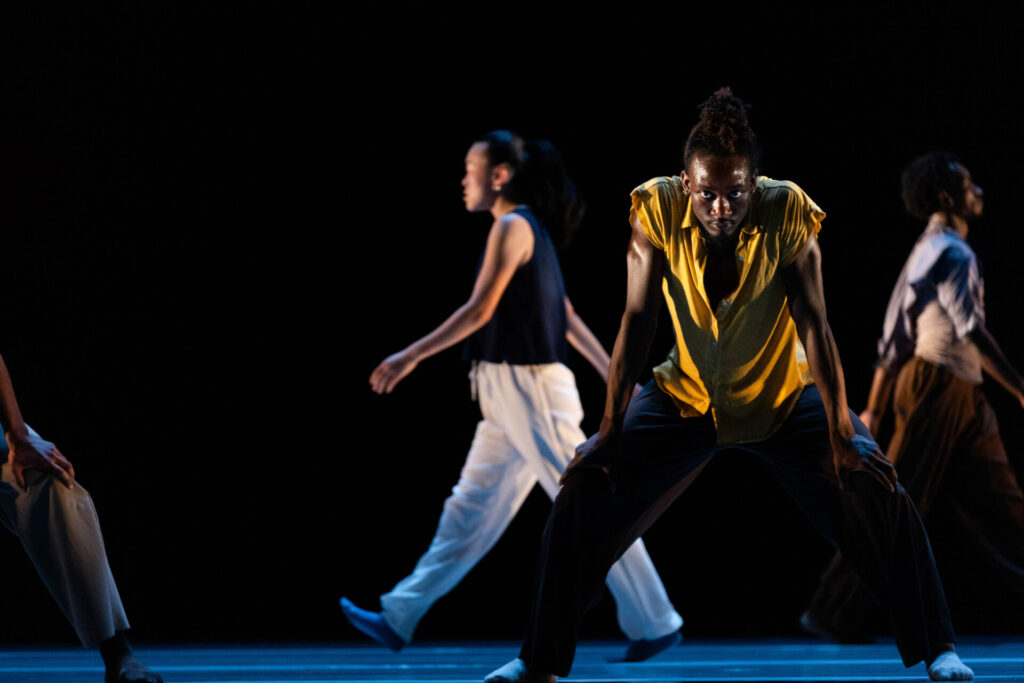
Review by Celia Ipiotis
Crowds gathered in front of City Center on the opening night of Fall For Dance Festival 2026. Reasonable ticket prices of $30 and a sampling menu of 3 dance companies each night drew dance die-hards and newbies. When greeted by the congenial CEO Michael S. Rosenberg, the audience roared approval for another season of dance.
Known for the commanding choreography of its founder Kyle Abraham, A.I.M Kyle Abraham invited Jermaine Spivey to create a new work set to his own electronic score for the well versed company. Three rows of dancers, abstractly connected, extended across the stage. They broke into pairs supporting each other’s weight, twisting and dropping to the ground in unexpected ways.

At one point, a dancer crossed her leg above the knee and dropped to the floor only to spin around and pop back up. The sense of disparate parts falling off center prevailed, generating a feeling of aimlessness within a community struggling to protect its members against combative forces. A repetitive electronic sound score droned throughout the piece, occasionally changing tones.
Within the score’s monotone, dancers added variety by clapping out a syncopated rhythm with their feet and hands. A blue light beam pressed across the top while words projected on the back wall combined to form a paragraph dancers vocalized, compounding the rhythmic structure. In the second half, the blue beam turned into a white beam and lowered down half way, but those visual changes did not alter the flavor of choreography.

In a kiss blown to 19th century dance Gerald Arpino, best known for his contemporary ballets, choreographed a duet, L’Air D’Esprit, that both honored and mocked the fanciful ballets of the Romantic era. Streaking through the overhead lights, Skylar Brandt flew like a sylph, weightless through the heavens hoisted by her cavalier Aran Bell. Disappearing into the wings, they returned for a repeat flight. Florid arms and gallant poses framed the lyrical quality of the choreography. Fluid in form, Brandt easily spoke the vintage language of ballet.
While Brandt’s legs floated up in airy extensions, Bell quitely assumed the yeoman task of hauling his ballerina over the circumference of the stage. In a muscularly difficult move Bell held her up, then very slowly lowered Brandt while revolving in place. Referncing the aesthetic tradition, Bell took a solo that was well executed and followed by Brandt who breezed through her solo trimmed with quick turns and petit jetes and finally they rejoined for the grand finale.

Cortege, re-imagined by Baye and Asa, alerted all to its dark nature. A black cloth covered a line of dancers who spilled out, fell down and were lifted back up. At once mysterious and dark, Cortege bonded dancers from the Martha Graham Dance Company in pairs, lifting and sheltering one another. Inspiration for the piece came from Martha Graham’s Cortege of Eagles choreographed in 1967 and meant as an anti-war piece couched in the tensions of the Trojan War in ancient Greece. Loss and resurgent strength mark both works, although Baye and Asa’s felt darker in its call for humanity’s destiny.
EYE ON THE ARTS, NY — Celia Ipiotis